
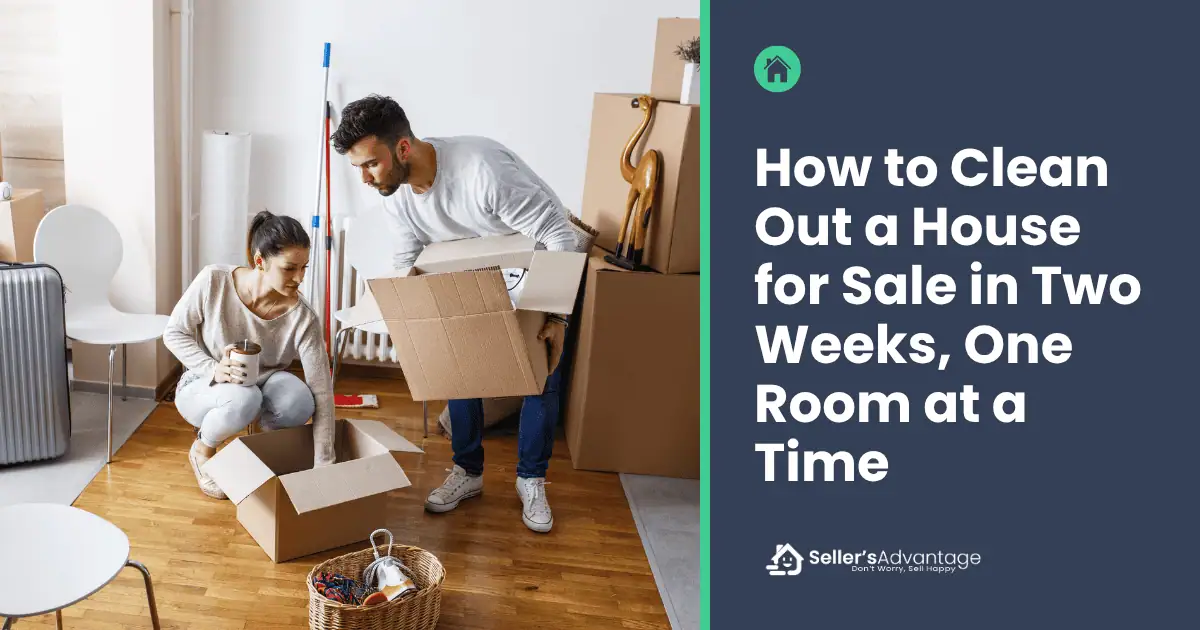
Emptying a house looks manageable until you open the first closet. Then it’s twenty years of holiday decorations, a drawer of keys nobody can match, and a garage you’ve avoided since spring. If you’re dealing with a deadline while working, grieving, or packing up your own life, the clutter can feel overwhelming for one person.
It’s a common spot to be in. Most houses that go up for sale were lived in for years, and years of living leave a lot of stuff behind. With a clear plan, you can clean out a house for sale in about two weeks, and we’ll walk you through it one room at a time.
We’re Seller’s Advantage, a family-owned, licensed California brokerage that buys homes directly across Los Angeles, Orange County, and the rest of Southern California. We’ve spent years walking through houses at every stage of a cleanout. In a lot of Southern California homes, the garage stopped holding a car long ago. Mild weather made it easy to keep adding to it, so this plan saves the garage for last.
Before you start, though, one decision shapes the whole project.
Pick Your Finish Line First
How empty the house needs to be depends on how you plan to sell it. A traditional sale means listing the property with a real estate agent so buyers can tour it and make offers. Those buyers usually expect empty rooms or light staging. Staging means arranging a few pieces of furniture and decor so the rooms photograph well.
Selling as-is works differently. As-is means the buyer takes the house in its current condition, with no repairs. Some as-is buyers will also let you leave behind unwanted belongings. Ask before you plan around it.
If you’re still weighing your options, our guide to selling an inherited house in California lays out each path. The plan below works for any of them. You’ll just stop at a different point.
Once you know where you’re stopping, every item in the house gets one of four labels.
Four Piles, One Decision Per Item
Each thing you pick up goes into one pile:
- Keep. Items you’ll move, store, or give to a family member.
- Donate or sell. Usable items someone else would want, through local charities or by selling online.
- Haul. Trash, broken items, and anything nobody will take.
- Leave. Items you’ll leave for an as-is buyer, if your buyer allows it.
Touch each item once. Decide, label it, and move on. Re-sorting the same box twice slows the whole process. When something stops you cold, put it in a small decide-later box and keep going.
Many families split the rooms between helpers. Colored tape or sticky notes help everyone on your team organize efficiently.
With the piles set, the first two days are about clearing a path out of the house.

Days 1 and 2: Line Up Where Everything Goes
Start with logistics, not rooms. Belongings can only leave the house as fast as you have somewhere to send them.
- Pull important papers first. Look for wills, deeds, car titles, insurance policies, tax records, passports, and photos. Put them in one box that leaves with you today.
- Book junk removal early. Hauling crews and rental dumpsters can book up, so get on their schedule now. Many cities need a permit before a dumpster goes on the street, so check with your city first.
- Schedule a bulky item pickup. Bulky items are large pieces like couches, mattresses, and appliances. The City of Los Angeles offers bulky item pickup for the homes it serves, and you can schedule it through the MyLA311 app. Other cities run their own programs.
- Find your hazardous waste drop-off. You’ll need it around day 11. The garage section below covers it.
- Line up donation pickups. Many local charities will pick up old furniture, but their calendars fill quickly.
Now the rooms, and the easy ones go first.
Days 3 to 5: Start Where It’s Easy
Begin with spaces that hold the least emotion. Bathrooms, the linen closet, the laundry room, and the pantry are good places to start. A few cleared rooms early give you space to stack boxes and proof the plan is working.
In the kitchen, toss open and expired food. Unopened food that hasn’t expired can often go to a community food bank. Keep a few dishes and cleaning supplies for the rest of the job.
Old medications need their own bag. Don’t flush them or pour them down a drain. LA County lists take-back sites and free mail-back envelopes for unwanted medicine.
The next rooms take longer, and it’s okay to slow down there.
Days 6 to 8: Bedrooms and Closets
Bedrooms are where most cleanouts stall. Clothes, letters, jewelry, and photos carry memories, and memories take time. If you need an hour with a shoebox of old cards, that hour isn’t wasted. It’s part of the work, and the schedule has room for it.
A few habits keep things moving:
- Give each family member one or two boxes for keepsakes, and fill those first.
- Photograph items you love but can’t keep.
- Check pockets, shoe boxes, and the backs of drawers. Cash, jewelry, and papers turn up in odd places.
Clean, wearable clothing and linens can go to donation. Stained or torn fabric goes in the haul pile, though some cities recycle old textiles.
After the bedrooms, the big pieces in the living areas go faster than you’d think.
Days 9 and 10: Living Rooms and Big Furniture
Living and dining rooms tend to hold fewer small items and more large ones.
Furniture in good shape should go first, since it needs a pickup date to sell or donate. Old furniture that’s broken or worn can go out with your bulky item pickup or hauling crew. Put old TVs, computers, and other electronics in a separate pile, because many of them can’t go in the trash in California.
Line up help before you move anything heavy. A sore back on day nine can undo the rest of the week.
If you find mold behind furniture or inside a closet, pause before you scrub. The EPA says most people can clean a patch smaller than about 10 square feet themselves. Larger areas, or mold from sewage or major water damage, call for a professional.
That leaves one space, and there’s a reason it waited until now.
Days 11 to 13: Save the Garage for Last
The garage goes last for two reasons. As rooms empty, it becomes the holding space for donations and hauling piles until pickup day. It also tends to hold the biggest mess and most of the hazards, and those take a few extra steps.
Household hazardous waste means products labeled toxic, flammable, corrosive, or poisonous. Think paint, paint thinner, pesticides, pool chemicals, motor oil, antifreeze, and strong cleaners. Batteries, fluorescent bulbs, and many electronics fall under a related group called universal waste. California’s Department of Toxic Substances Control says households can’t put universal waste in the trash.
In Los Angeles County, you have two free options:
- County collection events. LA County Public Works holds free drop-off events for hazardous waste and electronics around the county. You’ll find upcoming dates on CleanLA.
- City drop-off centers. The City of Los Angeles runs permanent sites called S.A.F.E. Centers, short for Solvents, Automotive, Flammables, and Electronics. They’re open on weekends to both City and County residents, free of charge. Each visit has a limit of 15 gallons or 125 pounds per vehicle, and sites can close in rainy weather.
In Orange County, four permanent collection centers in Anaheim, Huntington Beach, Irvine, and San Juan Capistrano accept household hazardous waste free from county residents. Riverside, San Bernardino, Ventura, and San Diego counties each run their own programs, listed on each county’s website.
Keep products sealed in their original containers and upright in your trunk. Never combine them. Once the hazardous items are gone, the rest of the garage sorts like any other room. Anything you can recycle goes to recycling.
By the end of day 13, the heavy lifting is done. One last pass finishes the job.
Day 14: The Final Walk-Through
Walk every room one more time with fresh eyes. Open each cabinet, closet, and drawer. Check the attic, under the sinks, the water heater closet, side yards, and any shed. Those are the spots a thorough cleanout still tends to miss.
What comes next depends on your finish line. To prepare for a traditional listing, plan on a deep cleaning, and maybe some touch-up paint, before listing photos. For an as-is sale, you can often stop once your keep pile is out.
Before you hand over keys, forward the mail and schedule final utility readings. Keep the power and water on through closing. Closing is the last step of a sale, when the final papers are signed and the home officially changes hands.
Fourteen days is a solid plan. Sometimes, though, life has other ideas.
When Two Weeks Isn’t Realistic
Some cleanouts can’t happen in fourteen days, even when you work hard at it, and that says nothing about you. Distance, health, or a lifetime of belongings with no one to help can all get in the way. No cleanout is completely stress free, and those limits are real. You can plan around them.
This plan fits an ordinary full house. Hoarding situations, where items block rooms or raise safety concerns, usually call for specialized help.
The right solution depends on your time, budget, and what’s inside:
- An estate cleanout company. Junk removal and estate cleanout services sort, haul, donate, and recycle for you, no matter the size of the house. Some offer a free consultation or on-site estimate. Get two or three written quotes before paying anyone, and ask about hidden fees and what they do with hazardous items. The most affordable choice is the one with honest pricing in writing, and a business you can rely on should have references you can check.
- An estate sale company. This kind of company prices and sells the contents of an estate, usually for a share of what sells. It makes the most sense when the house holds antiques, quality furniture, or a full workshop of tools with real value.
- An as-is sale. Some buyers let you take what matters and leave the rest. You may get a lower sale price in exchange for skipping the work. What counts, though, is your net proceeds, meaning the money you keep after every cost is paid. Once you add up cleanout costs, repairs, agent commissions, and the bills that keep coming while a house sits, the gap often shrinks. A commission is the share of the sale price paid to the agents.
Our step-by-step guide to the cash sale process covers each stage.
A few questions come up in almost every cleanout we see.
Questions We Hear Most
Do I have to empty the house before I sell it? Not always. Traditional buyers usually expect it empty by closing unless your contract says otherwise. Many as-is buyers will take the home with belongings still inside.
Will a junk removal crew take paint and chemicals? Ask first. Many won’t, and California doesn’t allow these products in the regular trash. A county drop-off site or collection event is the safe route.
And if the whole house starts to feel like one big decide-later box, there’s another way to finish.
Leave the Rest With Us
Some people finish this plan feeling relieved and in control. Others find the thought of moving, sorting, and cleaning overwhelming, and that’s completely okay.
At Seller’s Advantage, we understand that moving can be a lot to handle, especially when life is already busy or stressful. That’s why we buy homes as-is across Southern California. You can take what truly matters to you and leave the rest behind. Our team will walk through your home, and within 24 hours, you could receive a no-obligation cash offer. There’s no pressure to accept, no commissions to pay, and if you do say yes, we’ll work with your timeline, closing can happen as soon as 7 to 14 days or whenever you’re ready. You choose the date, and we won’t rush you out.
If moving and clearing the house feels like too much right now, know that with Seller’s Advantage, you don’t have to do it alone. We’ll take care of the rest so you can focus on what’s next.
And if preparing your home for sale would bring you more money, we’ll be honest and let you know. Either way, we’re here to guide you gently through the process, helping you worry less and look forward to your next chapter.
Talk with our team about your home →
Sell Your House Fast For Cash
We Buy Houses in Southern California As-Is
Close on your timeline and avoid the hassle of traditional fees.

Get My Free,
No-Obligation Quote
Call us today at 800-208-3243 and get an offer in as little as 24 hours. It’s quick and easy!
"*" indicates required fields
Southern California’s Most Trusted Home Buyers

